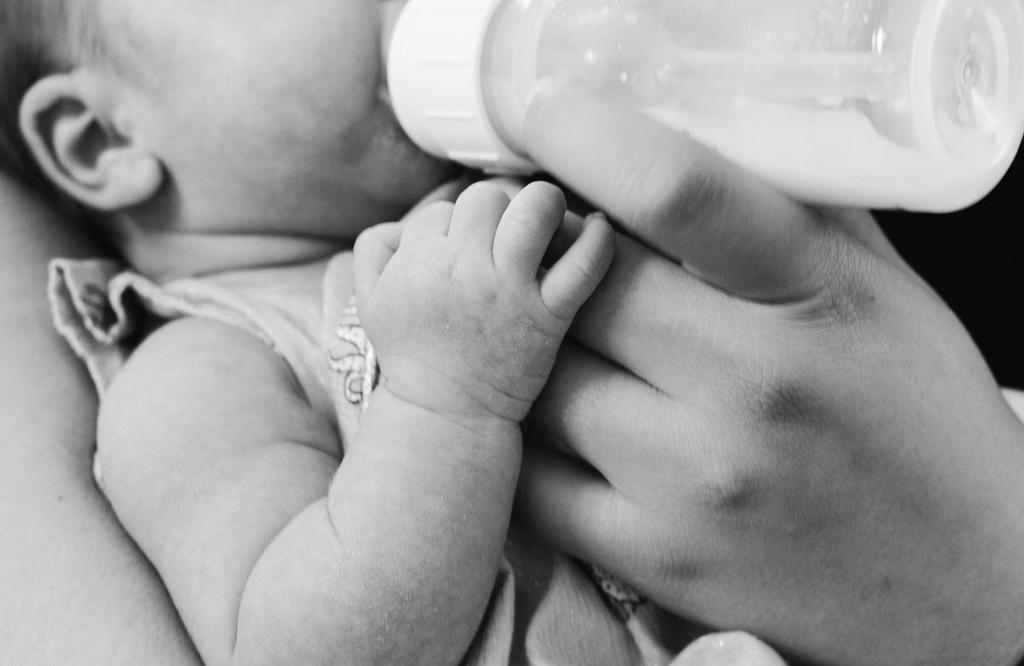
FORMULA FEEDING: WHAT EVERY NEW MOM NEEDS TO KNOW
“I’m exhausted, I can’t do this anymore.”
These were Tracy’s exact words when she came into the hospital with her baby three weeks after birth. She had eye bags and had lost a bit of weight.
“My nipples hurt, and my baby won’t latch well. I barely get enough sleep,” she added.
Tracy was a first-time mom. She had looked forward to having her baby.
Like many new moms, she decided on exclusive breastfeeding once she had her baby, but her experience so far hasn’t been favorable.
Being a new mom can be daunting, especially in the first few weeks or months.
Early mornings, late nights, sore nipples, and engorged breasts, physical and mental exhaustion: it's a lot.
Her Doctor suggested she consider formula feeding to ease her pain and help her baby, who was struggling to latch.
She initially refused because she felt guilty. Her friends who had babies before her exclusively breastfed their babies.
Dear new mom, choosing to formula feed your baby doesn’t make you a bad mom. You just need the right information to do it safely and confidently.
Bodies differ, and one mom’s experience is different from another's. Choosing to formula feed or breastfeed is a decision only you can make; no one else should make that choice for you.
With formula feeding, you can have some time for yourself while someone else takes care of feeding your baby.
This guide will help you understand what formula feeding means, how to choose the right type and forms of formula, how to prepare, and common mistakes to avoid.
What is Formula Feeding and Is it Okay for Babies ?
The primary source of food and nourishment for newborns is breast milk. Formula feeding is a practice of providing food and nourishment for your baby without breast milk.
A mother might find it difficult to breastfeed for many reasons. It could be due to health reasons, a work-life balance issue, or it may even be a personal choice. Whatever the reason might be, a mother can resort to formula.
Infant formula is a healthy alternative to breast milk that is produced to provide essential nutrients to support your baby’s health and growth.
Nutrients such as vitamins, protein, carbohydrates, fats, minerals, etc., are present in formulas in quantities needed to meet your baby's growth and development.
Most formulas are usually made from cow’s milk, while some are made from soy and goat milk. They are specially processed to make them safe and easy for your baby to digest.
Health bodies, such as the World Health Organization (WHO), American Academy of Pediatrics (AAP), and the American Medical Association (AMA), all advise breastfeeding infants for at least the first six months of their lives.
This is because breast milk contains every nutrient necessary for your baby’s immune system.
In situations where infants cannot be provided with breast milk, formula feeding is a healthy choice to consider.
Breast milk or Formula? Both are healthy options for your baby and, as a mother, regardless of what you decide, you are the best mom in the world for your baby.
When prepared safely, formula is safe for your baby to consume until they are 12 months old.
Choosing the Right Formula for Your Baby
There are factors to consider when choosing the type of formula to feed your baby. These include:
Your baby's age
Your baby's needs
Allergies, if any
Your budget
Availability
Before choosing a formula to feed your baby, consult with your pediatrician.
Types of Infant Formula
“What type of formula is best for my baby?” you might ask.
Infant formula comes in different types. Each type depends on the protein base.
Cow milk: Most commonly used protein base. It is suitable for most infants.
Soy-based formula: This is mainly for babies who can’t tolerate the lactose present in cow milk. It is plant based.
Hydrolyzed formula: This contains proteins that have been broken down for easy digestion. It's for babies with sensitive tummies.
Forms of Infant Formula
Infant Formula comes in 3 forms:
Powder form: Must be mixed with a specific amount of water before you can feed it to your baby. It doesn’t need any special form of storage once opened, and it’s not expensive.
Liquid form: An equal amount of water is needed to mix this before it can be fed to your baby. It needs to be stored in the fridge and consumed within 48 hours.
Ready-to-feed: This comes already prepared and can be fed to your baby. It needs no water. Like the liquid formula, it needs to be consumed within 48 hours. More expensive than the other two.
Can You Combine Breast Milk and Formula? (Mixed Feeding)
Yes, you can. Alternating between giving your baby breast milk and infant formula is referred to as mixed feeding.
However, note that mixed feeding can have an impact on your milk supply. The more breast milk your baby takes, the more breast milk you supply. Once you begin to formula feed your baby, your breast milk supply will reduce.
If you intend to combine both, exclusively breastfeed your baby in the first few weeks to establish your milk supply before introducing formula.
Striking a balance in your baby’s feeding routine of formula and breast milk is totally dependent on you and your baby. You never can tell until you give it a try.
How to Prepare Formula Safely.
Formula feeding is mostly done using bottles and teats. Your baby's immune system is fragile, therefore safe preparation is key. Here's how to do it right.
Always wash your hands before preparing formula.
Ensure the mixing area is properly cleaned; you want to avoid contamination.
Bottles and teats must be properly sterilised before each use
Make use of boiled water that has cooled to 70°C (not room temperature).
Follow the instructions on the formula container to get a good formula mix.
Hold your baby in a semi-upright position while feeding to support breathing and easy swallowing.
Common Mistakes to Avoid
Even the most careful mums make mistakes. As a new mum, here are a few mistakes to watch out for:
Always check the temperature of the formula by placing a few drops on the back of your palm.
Always add the right amount of water. Don’t over-dilute or under-dilute formulas.
Don’t warm bottles in the microwave; instead, place bottles in bottle warmers or warm water.
Prepare the formula just before feeding and use it within 2 hours.
Always check the expiry date.
Recognizing Your Baby's Hunger Cues
Babies cannot properly communicate with you yet but they show signs.. A few of these signs include:
Restlessness, such as turning the head from side to side.
Sucking a finger or pulling nearby items towards the mouth
Smacking or licking lips
Crying
Note: Crying is a late sign of hunger in babies.
Conclusion: Happy MUM, Happy Baby!
Remember Tracy from earlier? She took her pediatrician’s advice and everything changed.
Her baby is thriving and healthy. She’s regained her strength and is thriving too.
If you are considering formula feeding, know that you are not alone. it is always best to consult with your pediatrician. Every baby is different.
You are not less of a mother whether you choose to formula feed or breastfeed. You can only be there for your baby if you are doing well yourself.
Fed is best. Happy Mum, Happy Baby!
Want more baby care tips? Check out our guide on Baby Bathing Basics.
Post a comment